
WISC Biotech Blog & Insights
2026 Best Plant Based Sugar Substitutes for Global Buyers
Table of Contents
- What Plant-Based Sugar Substitutes Are and How They Work
- The Main Types of Plant-Based Sugar Substitutes in 2026
- How to Compare Taste, Nutrition, Safety, and Applications
- Global Sourcing Standards, Certifications, and Regulatory Requirements
- How Buyers Can Select Suppliers and Plan Successful Procurement
- FAQS
- Conclusion
- Related Posts
Choosing the right sweetener has become a strategic decision for global food and beverage buyers. In 2026, Plant Based Sugar Substitutes must satisfy more than taste expectations. Buyers also need dependable supply, transparent labeling, stable pricing, and documented safety evidence.
This guide examines practical options such as stevia, monk fruit, erythritol, allulose, coconut sugar, and date-based sweeteners. Each ingredient behaves differently in coffee, bakery fillings, dairy alternatives, sauces, and nutrition products. Stevia can deliver strong sweetness at very low use levels, yet some formulas may show bitterness. Monk fruit offers a rounded profile, although availability and pricing can vary between regions. Sugar alcohols may improve texture, but digestive tolerance requires careful consideration.
Real purchasing decisions rarely look perfect. A sample may taste excellent but fail during heating. A supplier may provide attractive pricing but limited traceability. These gaps deserve attention. Buyers should request certificates, recent laboratory reports, allergen statements, origin details, and clear specifications before approving a product. They should also review local labeling rules, import requirements, and permitted claims with qualified regulatory professionals.
This overview is designed for manufacturers, distributors, private-label brands, and procurement teams comparing international suppliers. It focuses on evidence-based evaluation rather than marketing promises. Taste matters. So does resilience. The best choice may not be the sweetest ingredient, but the one that performs consistently, meets legal requirements, and supports honest communication with consumers. Even then, product testing remains essential, because no single substitute fits every market or application.
What Plant-Based Sugar Substitutes Are and How They Work
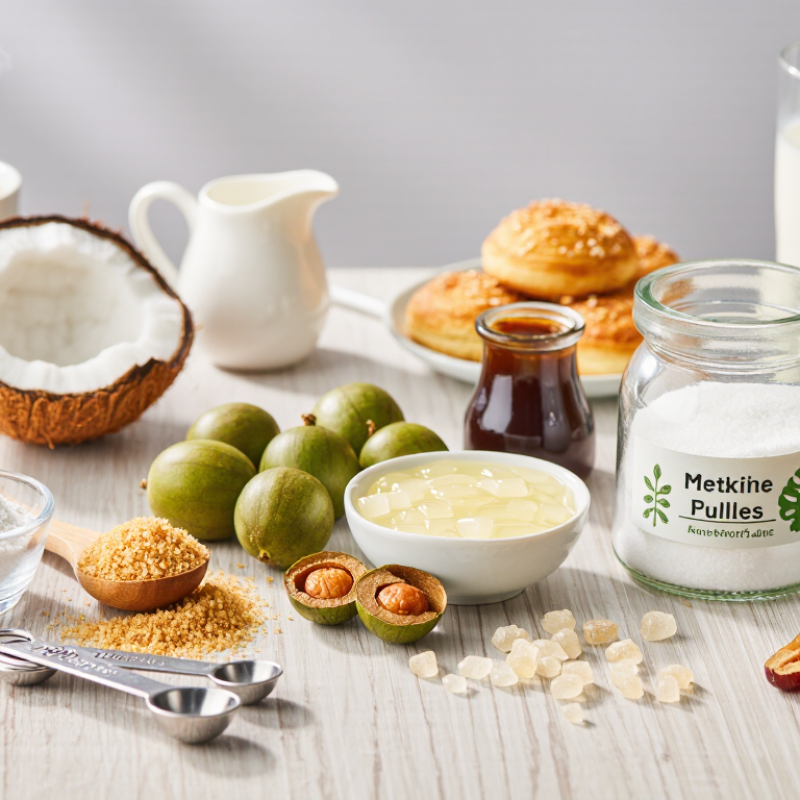
Plant-based sugar substitutes are sweetening ingredients derived from leaves, fruits, roots, or plant-based fermentation. They do not all work like table sugar. Steviol glycosides activate sweet taste receptors at very low levels, so manufacturers often use them with bulking ingredients. Monk fruit compounds work similarly, while soluble fibers can add body with mild sweetness.
Sugar does more than sweeten food. It provides volume, moisture, browning, and a softer texture. A substitute may replace the sweetness but not these functions. In a biscuit trial, the dough can spread less and feel drier. In a beverage, a sweetener may leave a lingering taste or uneven sweetness. Small formulation changes matter.
For global buyers, “plant-based” is not one universal legal category. Check the botanical source, extraction method, purity, allergen statement, and country-specific approval status. Reliable suppliers should provide certificates of analysis, batch details, recommended use levels, and stability data. Test the ingredient in the final product, not only in water. Taste changes with acidity, heat, minerals, and storage time. That part is often underestimated. A clean label can still deliver poor texture, and a natural source does not automatically mean better nutrition. Experienced buyers compare sweetness curves, cost per sweetening unit, supply consistency, and consumer acceptance before approving a formula.
The Main Types of Plant-Based Sugar Substitutes in 2026
Plant-based sugar substitutes in 2026 fall into several practical categories. Steviol glycosides provide intense sweetness with almost no bulk. They suit beverages, tabletop sachets, and reduced-sugar formulas. Some users notice a herbal or slightly bitter aftertaste. Monk fruit extracts offer a rounded sweetness, but their flavor can change when blended with acids or minerals.
Rare sugars form another important group. Allulose behaves more like sugar in baking, sauces, and fillings. It adds bulk, browning, and a softer texture. However, it can create digestive discomfort for some consumers when used heavily. Plant-derived erythritol and other sugar alcohols support low-sugar confectionery, though cooling sensations may appear on the tongue. Formulators should check tolerance information carefully.
Less refined options include coconut sugar, date sugar, and yacon syrup. They deliver recognizable plant notes and small amounts of naturally occurring compounds. Their color can darken light products. Their sweetness also varies between harvests. I have found that ingredient consistency matters more than marketing language. Buyers should request origin records, purity data, allergen statements, and stability results. Sweetness alone is not enough. Global acceptance differs by market, especially for rare sugars and concentrated extracts. A blend may perform better, but it can hide weaknesses rather than solve them. That deserves another review before large-scale purchasing.
How to Compare Taste, Nutrition, Safety, and Applications
Global buyers should compare sugar substitutes by function, not marketing language. “Plant-based” does not automatically mean nutritious or universally approved. The World Health Organization’s 2023 guideline recommends keeping free sugars below 10% of daily energy, with a conditional target below 5%. The 2024 IFIC Food & Health Survey found that roughly three in four Americans were trying to limit or avoid sugar. Demand is real. Yet sweetness alone is a weak purchasing test.
Taste trials should use the final product, not water alone. Steviol glycosides can deliver strong sweetness but may leave bitterness or licorice notes. Monk fruit extracts often taste rounder, while allulose provides bulk, browning, and a more sugar-like texture. Coconut sugar and date-based sweeteners add flavor, but they still contribute meaningful sugars. Test after baking, chilling, and storage. Small details matter.
Nutrition and safety require separate checks. JECFA sets an acceptable daily intake for steviol glycosides at 0–4 mg per kilogram of body weight, expressed as steviol equivalents. Other sweeteners may have different limits, labeling rules, or no established global consensus. Regulatory treatment for allulose also differs across markets. Check specifications, contaminants, allergen statements, and gastrointestinal tolerance data. Applications should match the ingredient: beverages need clean dissolution, bakery products need volume, and sauces need stability. A useful warning: no substitute wins every test. Cost can distort judgment. Sodium, acids, and flavors may also change the result.
Global Sourcing Standards, Certifications, and Regulatory Requirements
Plant-based does not mean globally approved. Buyers should map each ingredient to its destination market before negotiating price. WHO recommends keeping free sugars below 10% of daily energy, with additional benefits below 5% (WHO Guideline, 2015). This target supports demand for steviol glycosides, monk fruit, erythritol, and other reduced-sugar options. Yet regulatory status differs. The European Union applies Regulation (EC) No 1333/2008, while the United States requires an authorized food additive or a valid GRAS basis. Some ingredients may need novel-food review elsewhere. Check early.
Global sourcing files should include origin, botanical identity, extraction method, carrier materials, allergen statements, pesticide results, heavy-metal limits, microbiological tests, and a lot-specific certificate of analysis. The Codex General Standard for Food Additives lists permitted categories and use conditions. An INS number alone does not prove acceptance. FSSC 22000 or ISO 22000 certification can support food-safety controls, but neither replaces local approval. Organic, halal, kosher, and non-GMO claims require separate evidence. Trace every drum.
Professional buyers should compare supplier controls with GFSI benchmarking requirements and relevant Codex hygiene principles. Independent audits can test mass balance, cleaning validation, change control, and recall speed. A certificate alone is weak evidence. In practice, documents may conflict: a specification lists one carrier, while the label draft lists another. Resolve that mismatch before shipment. Keep samples from each lot, especially when color, sweetness, or solubility shifts. The uncomfortable truth is that “natural” remains a marketing description, not a universal legal category. Country-by-country review is slower, but cheaper than a rejected container.
How Buyers Can Select Suppliers and Plan Successful Procurement
Global buyers should select plant-based sugar substitute suppliers by evidence, not attractive claims. Request a detailed specification covering sweetness, solubility, moisture, particle size, and storage conditions. Ask for recent certificates of analysis from each production lot. Test samples in the intended recipe, because a powder that works in tea may fail in baked goods. Sensory results matter.
Supplier audits should examine raw material origin, processing controls, allergen handling, and batch traceability. Confirm whether the supplier can provide consistent documentation across different harvest periods. Independent laboratory testing can verify microbiological quality, heavy metals, pesticide residues, and other relevant parameters. Certification may support confidence, but it does not replace verification. Some documents look complete yet answer very little.
Procurement planning needs more than a competitive unit price. Compare minimum order quantities, production capacity, lead times, packaging strength, payment terms, and delivery responsibilities. Build a small pilot order before approving a full contract. Keep at least one qualified alternative supplier when practical, especially for seasonal materials. Forecast demand with realistic safety stock, not optimistic spreadsheets. Review import rules and labeling requirements in every destination market with local specialists. A weakness remains: forecasts can still be wrong. Regular supplier reviews, complaint records, and quarterly quality checks help buyers adjust before a small issue becomes a costly shortage.
| Ingredient | Primary Plant Source | Approximate Sweetness vs. Sucrose | Energy and Glycemic Profile | Best Product Applications | Technical Characteristics | Procurement Advantages | Key Risks and Limitations | Supplier Qualification Checks | Regulatory Planning |
|---|---|---|---|---|---|---|---|---|---|
| Steviol Glycosides | Leaves of the stevia plant | Approximately 200–350 times sweeter, depending on the glycoside profile and purity | Provides negligible calories at normal use levels and has little effect on blood glucose when used as an intense sweetener | Beverages, dairy alternatives, tabletop sweeteners, confectionery, sauces and reduced-sugar formulations | Heat-stable over typical food-processing conditions; sweetness quality varies by rebaudioside composition and may include bitterness or liquorice-like notes | Very low dosage can reduce storage and freight volume; suitable for high-intensity sweetness systems | May require blending with bulk ingredients to match sugar texture and mouthfeel; taste masking can increase formulation complexity | Verify glycoside assay, rebaudioside profile, solvent-residue limits, heavy metals, pesticide residues, microbiological results and batch-to-batch taste consistency | Permitted forms and maximum-use conditions differ by market; review local food-additive, novel-food and labeling requirements before import |
| Monk Fruit Extract | Fruit of Siraitia grosvenorii | Approximately 100–250 times sweeter, depending on mogroside concentration | Normally used at very low levels and contributes negligible calories in the finished product | Beverages, plant-based dairy, nutrition products, tabletop blends and clean-label reduced-sugar foods | High-intensity sweetness; often combined with erythritol, soluble fibers or other bulking ingredients to improve volume and taste balance | Strong consumer interest in fruit-derived sweetening systems; useful for premium and natural-positioned products | Supply can be concentrated by growing region; extract color, flavor profile and mogroside concentration may vary considerably | Confirm mogroside V or equivalent assay, extraction method, carrier materials, authenticity testing, contaminants, allergen statement and country-of-origin documentation | Market authorization is not uniform worldwide; confirm whether the specific extract specification is approved, recognized or subject to pre-market review |
| Erythritol | Usually produced by fermentation of plant-derived glucose from corn, wheat, cassava or other starch crops | Approximately 60–70% as sweet as sucrose | Approximately 0.2 kcal per gram under commonly used food-labeling conventions; generally has a minimal immediate effect on blood glucose | Tabletop blends, beverages, bakery products, chocolate-style products, fillings and sugar-reduction systems | Crystalline bulk sweetener with good heat stability; produces a noticeable cooling sensation and can recrystallize in some applications | Provides bulk as well as sweetness; relatively low moisture uptake compared with several other polyols | Excessive intake may cause gastrointestinal discomfort; limited browning and possible recrystallization can affect bakery and confectionery performance | Check fermentation substrate, purity, particle-size distribution, moisture, residual sugars, microbiological quality, heavy metals and crystallization performance | Polyol labeling, caloric conversion factors, use limits and mandatory gastrointestinal-warning rules vary by jurisdiction |
| Xylitol | Produced from plant-derived hemicellulose, commonly from hardwood or agricultural residues such as corn cobs | Approximately 95–100% as sweet as sucrose | Approximately 2.4 kcal per gram in common nutrition-labeling systems; generally produces a lower glycemic response than sucrose | Chewing gum, mints, oral-care products, confectionery, tabletop sweeteners and some bakery applications | Similar sweetness and bulk to sugar; provides a cooling effect and can support non-cariogenic product positioning where permitted | Useful when buyers need near-sugar sweetness without relying solely on high-intensity sweeteners | High intake may cause laxative effects or digestive discomfort; highly toxic to dogs, requiring strict handling and finished-product controls | Verify raw-material origin, hydrogenation or processing controls, purity, residual catalysts, moisture, particle size, microbiology and animal-safety labeling controls | Confirm polyol status, permitted applications, nutrition-labeling rules and any required warning statements in each destination market |
| Allulose | Manufactured from plant-derived sugars, commonly through enzymatic conversion of fructose obtained from agricultural starch or sugar sources | Approximately 70% as sweet as sucrose | Approximately 0.2–0.4 kcal per gram in markets that use reduced-energy labeling for allulose; generally has a limited effect on blood glucose | Bakery, ice cream, sauces, beverages, fillings, caramel-style products and reduced-sugar formulations requiring browning | Provides bulk, freezing-point depression and browning behavior closer to sugar than high-intensity sweeteners; can be hygroscopic | Useful for texture, color development and soft bite in products where stevia or monk fruit alone is insufficient | Regulatory acceptance and nutrition-labeling treatment vary significantly; high use levels may affect texture and digestive tolerance | Check dry-solids content, purity, residual fructose, color, moisture, microbiology, stability data and performance in the buyer’s target formulation | Confirm country-specific authorization, permitted food categories, energy calculation and whether the ingredient may be excluded or reduced in declared sugars |
| Yacon Syrup | Roots of the yacon plant | Typically lower than sucrose, often approximately 30–50% depending on solids and fructooligosaccharide content | Contains fructooligosaccharides and naturally occurring sugars; energy and glycemic effects depend on composition and serving size | Granola, snack bars, sauces, bakery products, dressings and premium natural sweetening systems | Dark syrup with caramel-like flavor; contributes moisture and soluble solids but is less suitable where a neutral flavor or crystalline texture is required | Can provide a recognizable plant-origin story and prebiotic fiber content when supported by validated specifications | Flavor, color and fructooligosaccharide levels can vary; excessive intake may cause gas or digestive discomfort; raw-material supply may be seasonal | Verify fructooligosaccharide profile, soluble-solids content, sugar composition, pesticide residues, microbiology, authenticity, shelf life and heating stability | Check claims rules for “prebiotic” or fiber benefits and confirm whether the product is regulated as a conventional food, ingredient or novel food |
| Inulin and Chicory Root Fiber | Chicory root and other plant sources containing fructans | Approximately 5–10% as sweet as sucrose; generally used as a bulking or fiber ingredient rather than a standalone sweetener | Lower available energy than sucrose; physiological response depends on degree of polymerization, serving size and the complete formulation | Protein bars, cereals, dairy alternatives, beverages, bakery products and blended sugar-reduction systems | Provides body, solids and fiber; can improve mouthfeel but may contribute sweetness only at relatively high inclusion levels | Useful for replacing part of sugar’s bulk while supporting fiber-oriented formulations | High inclusion can cause bloating or gastrointestinal discomfort; may lose functionality under severe processing conditions or unfavorable pH | Check fiber assay, degree of polymerization, solubility, moisture, microbiology, contaminant limits and sensory performance at the intended dosage | Fiber definitions, nutrition claims, digestive-tolerance guidance and permitted health claims differ by market |
FAQS
Steviol glycosides offer intense sweetness with very little bulk. Monk fruit extracts taste rounder. Allulose adds bulk, browning, and softer texture. Sugar alcohols may create a cooling sensation. Coconut sugar, date sugar, and yacon syrup provide stronger plant notes.
Highly concentrated extracts suit drinks because they dissolve with little added volume. Test them in the final beverage, not plain water. Acids, minerals, and flavors can change the taste. A slight herbal note may appear.
Allulose often performs more like sugar in baked foods. It can support browning, filling, and softer texture. Coconut and date sugars add color and recognizable flavor. Check the finished product after cooling and storage.
Plant-based does not automatically mean nutritious. Coconut sugar and date sugar still contribute meaningful sugars. Extracts may provide sweetness with little bulk. Nutrition depends on the full serving and recipe.
Yes, heavy use of allulose may upset some consumers’ digestion. Sugar alcohols can also cause tolerance concerns. Review serving information carefully. Start with realistic portions.
Use the finished product during testing. Compare samples after baking, chilling, and storage. Check bitterness, herbal notes, cooling sensations, and aftertaste. A sweet sample can still fail in a sauce.
Request origin records, purity data, allergen statements, contaminant results, and stability information. Ask for gastrointestinal tolerance data when relevant. Harvest changes can affect color and sweetness. Marketing language is not enough.
No. Regulatory treatment differs between markets and ingredients. Some rare sugars and concentrated extracts have varying requirements. Check current local rules before purchasing. Global agreement is not guaranteed.
A blend may improve sweetness, texture, or aftertaste. It can also hide weaknesses instead of fixing them. Test the blend with acids, minerals, sodium, and flavors. I may judge blends too quickly. More review is needed.
Match the ingredient to the application. Beverages need clean dissolution. Bakery products need volume and browning. Sauces need stability. No substitute wins every test.
Conclusion
Plant Based Sugar Substitutes are naturally derived ingredients used to reduce or replace conventional sugar while maintaining sweetness, texture, and functionality in food and beverages. In 2026, global buyers can evaluate options such as plant-derived sweet extracts, sugar alcohols, soluble fibers, and low-calorie carbohydrate ingredients. Each type performs differently in terms of sweetness intensity, aftertaste, calories, glycemic impact, solubility, and heat stability, so selection should match the product’s formulation and target consumers.
Successful sourcing requires a balanced review of taste, nutrition, safety, application performance, and total cost. Buyers should confirm ingredient specifications, traceability, allergen controls, quality testing, and relevant certifications, while checking regulatory requirements in both exporting and importing markets. A reliable procurement plan should include qualified suppliers, sample trials, technical documentation, production capacity, packaging conditions, lead times, and contingency options. By comparing suppliers systematically and validating performance before large orders, companies can develop compliant, scalable, and consumer-friendly products with plant-based sweetness.

Blog Tags: